Whether Medicare beneficiaries are filling out forms for themselves or you are (or your organization is) billing Medicare or Medicaid for services, at some point, someone is going to encounter the acronym “NPI.”
Short for “National Provider Identifier,” this number is essential in your or the beneficiary’s Medicaid and Medicare billing process because it’s the one number that identifies you as someone who provides essential care and services. From an administrative standpoint, NPIs replace old ID numbers as part of a larger effort to make billing, claims, enrollment, and eligibility checks consistent across the healthcare system.
NPIs are required for all HIPAA-covered transactions, including for community health worker (CHW) and doula services. That’s why community-based organizations (CBOs) and members of the community workforce need to understand what an NPI is, who issues them, and how to get yours for seamless Medicaid and Medicare billing and claims.
What is a National Provider Identifier for medical billing?
A National Provider Identifier (NPI) is a unique 10-digit number assigned to healthcare workers and organizations that bill electronically for services (including billing claims, eligibility checks, and status updates).
Health care providers, including community-based providers such as CHWs, doulas, promotores, and care navigators, need an NPI to bill insurance.
There are two types of NPIs: type 1 and type 2.
Type 1 NPIs explained
Type 1 is used by individual providers, including traditional medical providers (i.e., physicians and dentists), but also CHWs, doulas, and CBOs that bill health plans.
A single person, or provider, is only eligible to receive one NPI, similar to how each person has a distinct Social Security number.
Type 2 NPIs explained
Type 2 is used by health care provider organizations.
This group includes physician groups, hospitals, nursing homes, community-based organizations, and corporations of individuals who have incorporated themselves.
One person can have a Type 1 NPI for themselves and a Type 2 NPI for their organization or LLC.
Why do you need a National Provider Identifier?
NPIs are now required for anyone who bills Medicare or Medicaid and are the latest standard for any provider or organization submitting HIPAA-covered transactions electronically. It replaces legacy systems, and it’s compulsory, as long as you’re someone who submits claims electronically.
Having an NPI is essential for reimbursement through Medicaid or Medicare, as well as for other transactions with payors. Depending on the state, an individual NPI may not be needed. In California, for example, the supervising provider, which could be a CBO (NPI type 2), needs an NPI. In Rhode Island, CHWs or their organization need an NPI for Medicaid billing purposes. For CHWs and healthcare professionals alike, transactions with payors can be anything from requesting payment to submitting a healthcare claim status, enrolling a patient in a health plan, and checking on a patient’s health plan eligibility.
Who can get a National Provider Identifier?
Any individual medical professional, healthcare worker, health plan provider, or healthcare clearinghouse can obtain an NPI. Thanks to expanded CHW and doula policies, such as the Medicaid CHW benefit, community health workers can also obtain an NPI.
Who issues NPIs for medical billing?
The Centers for Medicare and Medicaid Services (CMS) issues and manages NPIs for medical providers and organizations. The CMS houses NPIs in the National Plan and Provider Enumeration System (NPPES), a central database.
Once you receive an NPI, it stays with you throughout your career, even if you move to another role or organization. You can choose to deactivate your NPI online, but once deactivated, you must complete the same application process to update or reactivate it.
How do you get an NPI for yourself or your community workforce?
There are two ways to apply for an NPI for yourself or those in your organization: online or by mail. To apply online, create an account in the NPPES system. Then complete the identity and access (I&A) registration steps to obtain a user ID. After you get an I&A User ID, you can return to the NPPES home page and sign in. From there, select the Apply for an NPI button to begin.
You can also submit by mail by filling out the six-page application and sending it to:
NPI Enumerator
7125 AMBASSADOR RD STE 100
WINDSOR MILL, MD 21244-2751
The application has five sections: basic information, identifying information, business addresses and other information, certification statement, and contact person.
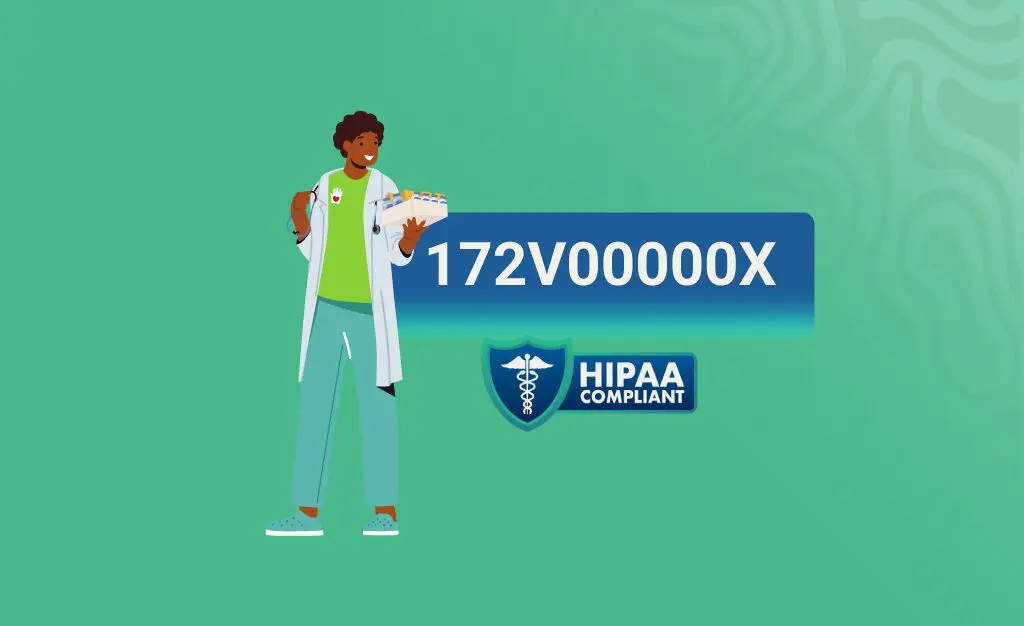
Section three, business addresses and other information, will ask for your provider taxonomy code and license number. Your 10-digit taxonomy code describes the kind of work you do. You may use multiple codes to describe your classification or specialization, which can be found on the National Uniform Claims Committee website. The primary taxonomy code for community health workers, for example, is 172V00000X.
Fortunately, the NPI application includes detailed instructions and links to applicable resources for each section, so it’s easy to find help if you get stuck.
How do you find out what your NPI number is?
If you believe you already have an NPI, you can search for it in the NPI registry, a free directory of all active NPI records. Simply enter your name (or organization name) and the address associated with the record.
Your unique NPI (type 1) stays with you throughout your career. So, even if you change organizations, your NPI will still be valid (as long as it’s active).
Is an NPI number the same as a medical license or certification number?
NPI numbers and medical license or certification numbers aren’t the same thing. Your license or certification number legally allows the provider to practice their profession in a given state, using a combination of letters and numbers to show which state the license is valid in.
Meanwhile, an NPI is a 10-digit code (with numbers only) required for any professional who submits HIPAA-covered transactions electronically. You may need to supply your medical license number to obtain an NPI, depending on your provider type.
Start filing claims, realizing revenue with Pear Suite’s NPI
Regardless of how you apply for an NPI, the process can still take time to complete. Online applicants usually receive their NPI in 10 business days. Paper applications, however, double that waiting time.
If your CBO or nonprofit is ready to start billing for services now but can’t wait for NPIs or needs to get other paperwork or certifications completed first, Pear Suite can help. CBOs, CHWs, doulas, and other community providers use Pear Suite’s NPI to bill managed care organizations and health plans for services provided to Medicaid or Medicare members.