It’s been three years since Rhode Island created a path to make community health work reimbursable through Medicaid. Previously, a friendly state for community health workers (CHWs) and community-based organizations (CBOs) to receive compensation for their services, a series of recent adjustments beginning in May 2025 has made the process more complex for CHWs and CBOs in Rhode Island.
Growing demand for CHW services and greater integration of the role into healthcare settings set the stage for changes to Rhode Island’s Medicaid practices. These updates aim to strengthen oversight, improve service quality, and align with national best practices. The state is also preparing for the future by introducing new Healthcare Common Procedure Coding System (HCPCS) codes to standardize billing, requiring electronic visit verification (EVV) for home-based CHW services in 2026, and phasing out standing orders.
These changes position Rhode Island’s Medicaid program as a national model for integrating CHWs into high-quality, accountable care delivery. However, after years of practice, understanding and applying the updates can leave community providers feeling overwhelmed. This guide simplifies Medicaid reimbursement requirements for new and existing providers alike.
Key takeaways:
|
How do you become a community health worker in Rhode Island?
The path to becoming a CHW in Rhode Island is similar to that in other states, requiring specific training and experience. Unlike many states, Rhode Island requires a CHW certification, which is managed through the Rhode Island Certification Board (RICB).
While there is no formal age requirement for certification, many training and internship programs require participants to be at least 18 years old.
To complete the application process, potential CHWs must meet the following requirements: 
- Complete six months of full-time or 1,000 hours of part-time work or volunteer experience as a community health worker.
- Share a copy of their current community health worker volunteer or job description from their current organization, signed by the applicant and their immediate supervisor.
- Complete 50 hours of on-the-job supervision of qualifying work experience in the community health worker domains.
- Complete 70 total hours of relevant education or training specific in CHW domains.
- Submit a portfolio, documenting their experience in three of six mandatory categories.
- Categories:
- Statement of professional and/or volunteer experience
- Community experience and involvement
- Community impact and/or research activities
- College-level courses or specialized training
- Community publications, presentations, and projects
- Categories:
- Performance evaluation
- Submit a completed application with a $125 fee. (Half of the fee is refundable if the application is denied.)
- New and revalidating CHWs must complete a Bureau of Criminal Identification (BCI) background check for Medicaid enrollment.
CHW community health worker domains
|
How do CHWs and CBOs work with Medicaid in Rhode Island?
CHWs and CBOs in Rhode Island can receive Medicaid reimbursement through the state’s fee-for-service Medicaid program. Unlike in California or Arkansas, where contracts with managed care organizations (MCOs) are required, Rhode Island allows certified CHWs to bill Medicaid directly.
The state supports direct billing by CHW provider organizations and is also moving toward broader integration of CHW services into value-based payment models. While most reimbursement is still fee-for-service, pilot programs and managed care partnerships (such as through Accountable Entities) are exploring bundled payments and care coordination fees.
Billing requirements for CHW services
CBOs interested in delivering reimbursable CHW services must enroll as Medicaid providers through Gainwell Technologies, Rhode Island’s Medicaid fiscal agent, obtain a National Provider Identifier (NPI), and be certified by the RICB to be eligible for Medicaid billing.
Due to recent changes to the Rhode Island Medicaid Program, CHWs must obtain full certification before being eligible for CHW reimbursement. Transitional certification eligibility ends October 1, 2025. (Any new applications after May 19, 2025, do not qualify for transitional options.)
To bill for services, CHWs or their employer organizations must:
- Be enrolled with Rhode Island Medicaid and have an active National Provider Identifier (NPI).
- Verify beneficiary eligibility for each date of service.
- Use approved billing codes or billing codes with modifiers.
- Deliver services that are medically necessary, ordered, or recommended by a licensed practitioner, and aligned with one of the state’s approved categories.
- Maintain thorough documentation, including duration and description of the service, its connection to a care plan or practitioner order, and any follow-up needed.
- Submit claims within 12 months of the date of service.
While CBOs can bill for CHW services through Medicaid, these new changes require CBOs and CHWs to partner closely with health organizations or partner with a provider, which makes working with clinical organizations or umbrella entities, such as Federally Qualified Health Centers (FQHCs) or behavioral health agencies, simpler for organizations to utilize the CHW benefit.
CHW services that are reimbursable
According to Rhode Island’s Medicaid State Plan Amendment and CHW Provider Manual, the reimbursable services include:
- Health promotion and coaching
- Health education and training
- Health system navigation and resource coordination services
- Care planning with a beneficiary’s interdisciplinary care team
To be reimbursed as preventative health services, CHW services must be recommended by a Licensed Practitioner of the Healing Arts (LPHA), which may include:
- Physician of any specialty, including pediatrics
- Physician assistant
- Advanced practice registered nurse
- Registered nurse
- Licensed practical nurse
- Certified nurse midwife
- Licensed dental hygienist
- Podiatrist
- Licensed chemical dependency counselors
- Psychologist
- Occupational therapists
- Licensed marriage and family therapist
- Licensed clinical social worker and licensed independent clinical social worker
- Licensed mental health counselor
- Certified professional midwives
- Pharmacist
The recommendation from a healing professional must be in place before CHW services are rendered; otherwise, they will not be billable.
Medicaid fee schedule and reimbursement rates for CHWs
Effective July 1, 2025, Rhode Island Medicaid will implement important updates to its CHW reimbursement policies, including service limits, new billing codes, and clearer guidance for individual and group services. Under the updated fee schedule, CHW services will be limited to no more than 12 hours per Medicaid beneficiary per month, or 48 billing units based on 15-minute increments.
CHW services must be billed using specific procedure codes aligned with the type of service provided:
- S9445: Individual health promotion and coaching, or health education and training
- S9446: Group health promotion and coaching or health education and training
- H0038: Individual health system navigation
These codes complement the continued use of the HCPCS code T1016 for case management services, which includes the following modifiers:
- T1016 with no modifier: Services provided to established patients
- T1016 with U3 modifier: Services provided to new patients
- Modifier U3 sunsets 19 May 2025 and may not be billed for services after that date.
- T1016 with HQ modifier: Group services, billed per eligible Medicaid member
Group-based CHW sessions will be limited to no more than eight Medicaid beneficiaries per session, and each participant must have individualized documentation and a service authorized by a licensed practitioner of the healing arts (LPHA).
These billing code changes are designed to standardize reimbursement, strengthen oversight, and support high-quality CHW service delivery across Medicaid-covered populations.
How does care navigation and billing software support Rhode Island CHWs?
Rhode Island’s Medicaid reimbursement for CHWs operates on a fee-for-service model, requiring detailed, timely, and accurate documentation for claims. Care navigation and billing software, like Pear Suite’s simplifies these processes, helping certified CHWs and the CBOs that employ them.
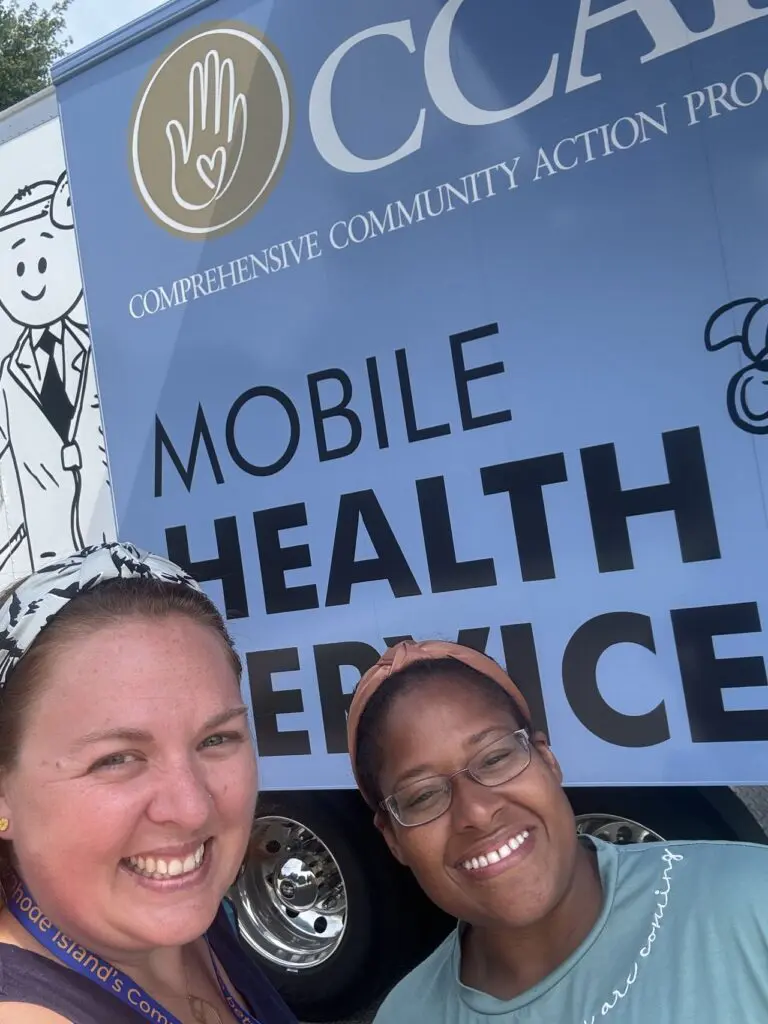
Before the changes to the Medicaid program in 2025, Wheelhouse Health Navigation used Pear Suite’s care navigation and billing software, while also acting as a billing hub for smaller CBOs and CHWs for faster Medicaid reimbursement through its organizational NPI. Wheelhouse still uses the platform for care coordination, referrals, communication, education, billing for their own CHWs, and other administrative steps related to community health work, helping their CHWs focus on service delivery rather than paperwork.
Since CHWs in Rhode Island must document their services thoroughly, including session details, time tracking, alignment with care plans, and confirmation that services were ordered or recommended by a licensed provider, Pear Suite’s platform simplifies this process. The platform’s intuitive interface captures all required data points and automatically generates compliant claims using correct HCPCS codes, ensuring every submission aligns with Medicaid billing standards..
Beyond billing, the platform helps CHWs manage closed-loop referrals, confirming whether clients successfully accessed services, like housing, food assistance, or behavioral health care, a function that is key for Medicaid’s growing focus on addressing social drivers of health. Pear Suite also tracks CHW credentials and certification timelines, helping organizations stay audit-ready and compliant with state requirements..
Pear Suite is SOC 2 and HIPAA compliant, ensuring that all patient data is protected under state and federal guidelines. The platform is also interoperable with Electronic Health Records (EHRs) and care management systems, providing seamless integration with clinical partners and Medicaid claims infrastructure.
By automating administrative tasks and ensuring alignment with Rhode Island’s Medicaid billing rules, Pear Suite enables CHWs and CBOs, including partners like Wheelhouse, to generate sustainable revenue while improving outcomes in the communities they serve.
Connect with our partnership team to find out how you can use Pear Suite to optimize your organization’s work while supporting Medicaid reimbursement.